📋 Key Takeaways
- Legal SEO requires ethical compliance - State bar advertising rules must guide all marketing efforts
- E-E-A-T is critical for attorneys - Demonstrating Experience, Expertise, Authoritativeness, and Trustworthiness is non-negotiable
- Local SEO dominates legal searches - 96% of people seeking legal advice use search engines
- Conversion optimization matters - The average law firm website converts at only 2-3%, top performers reach 10%+
- Content must demonstrate expertise - Practice area pages and legal guides establish authority
Legal SEO Overview & Market Opportunity
The legal services industry represents one of the most competitive and lucrative markets in digital marketing. With the average cost-per-click for legal keywords exceeding $50-100+ and some practice areas reaching $500+ per click, organic search optimization offers law firms a sustainable competitive advantage.
Why Legal SEO Is Different
Legal services SEO operates under unique constraints that don't apply to most industries:
- Ethical regulations - State bar advertising rules govern what attorneys can and cannot say
- YMYL classification - Legal content falls under "Your Money or Your Life" requiring highest quality standards
- High stakes decisions - Potential clients are often in crisis situations requiring trust signals
- Jurisdiction matters - Legal practice is location-specific, making local SEO critical
- Extreme competition - Personal injury, criminal defense, and family law are among the most competitive niches
The Legal Services Search Landscape
Understanding how potential clients search for legal services is fundamental to effective optimization:
| Search Intent | Example Keywords | Content Strategy |
|---|---|---|
| Emergency/Crisis | "DUI lawyer near me," "arrested need attorney" | 24/7 contact info, immediate consultation CTAs |
| Research/Informational | "how to file for divorce," "personal injury claim process" | Comprehensive guides, FAQs, legal resources |
| Comparison/Evaluation | "best personal injury lawyer [city]," "law firm reviews" | Case results, testimonials, credentials |
| Transactional | "free consultation criminal lawyer," "hire divorce attorney" | Clear pricing, consultation booking, intake forms |
Attorney Marketing Ethics & State Bar Compliance
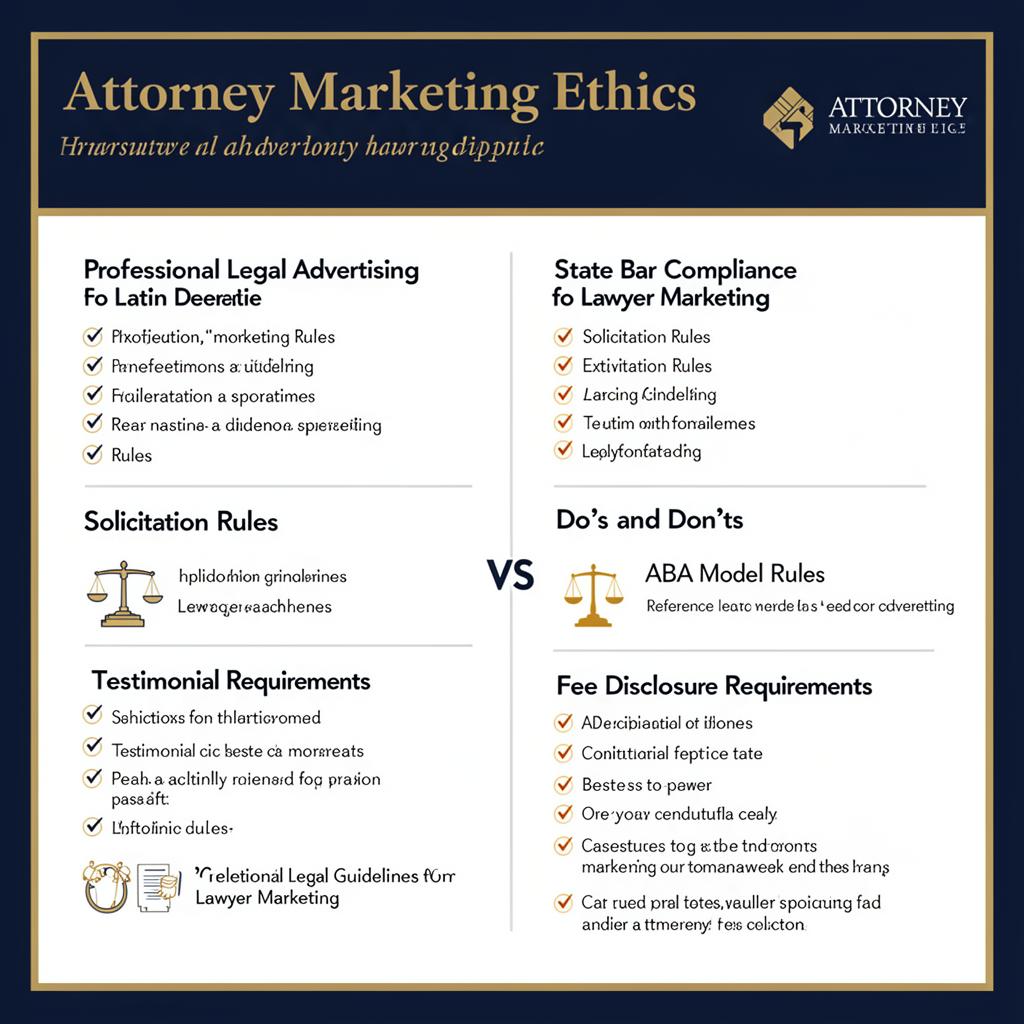
Every law firm's digital marketing strategy must operate within the bounds of professional responsibility rules. Violations can result in disciplinary action, license suspension, or disbarment.
ABA Model Rules Overview
The American Bar Association Model Rules of Professional Conduct provide the foundation for attorney advertising regulations:
Rule 7.1: Communications Concerning a Lawyer's Services
A lawyer shall not make a false or misleading communication about the lawyer or the lawyer's services. This includes statements that create unjustified expectations or compare services without factual substantiation.
Rule 7.2: Advertising
Lawyers may advertise through written, recorded, or electronic communication, including public media. However, advertisements must not be false or misleading and should identify the responsible attorney.
Rule 7.3: Solicitation of Clients
Direct real-time solicitation of prospective clients is generally prohibited when a significant motive is pecuniary gain, except in specific circumstances involving other lawyers or existing relationships.
Rule 7.4: Communication of Fields of Practice
Lawyers may communicate that they practice in particular fields of law but should be careful about using terms like "specialist" or "expert" unless properly certified.
State-Specific Compliance Considerations
While the ABA Model Rules provide guidance, each state bar has its own specific requirements:
✅ Legal Marketing Compliance Checklist
- Review your state bar's specific advertising rules before any campaign
- Include required disclaimers (e.g., "This is an advertisement," "Prior results do not guarantee similar outcomes")
- Maintain copies of all advertisements for required retention periods
- Avoid guaranteeing specific outcomes or results
- Properly attribute testimonials and case results
- Clearly identify paid advertising vs. organic content
- Ensure all attorney credentials and certifications are accurate and current
- Include responsible attorney identification on all marketing materials
Common Compliance Mistakes to Avoid
❌ Unsubstantiated Claims
"We win 99% of our cases" - Requires verifiable documentation and may still be misleading
❌ Misleading Specialization
"Board Certified Expert" - Unless actually certified by a recognized organization
❌ Improper Testimonials
Client testimonials without appropriate disclaimers about individual results
❌ Guaranteed Outcomes
"We guarantee a favorable settlement" - No attorney can ethically guarantee results
E-E-A-T Optimization for Lawyers
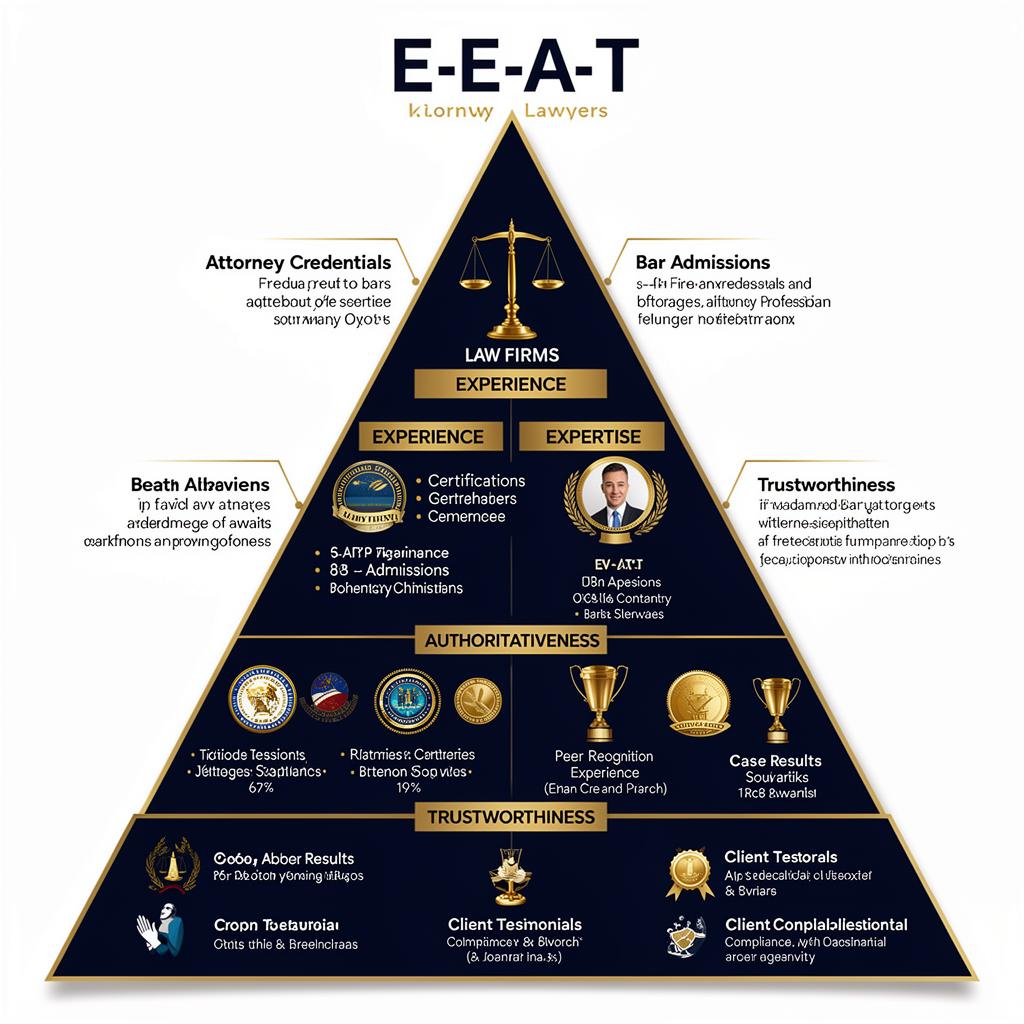
Google's E-E-A-T framework (Experience, Expertise, Authoritativeness, Trustworthiness) is particularly critical for legal services, which fall under YMYL (Your Money or Your Life) content categories.
Experience: Demonstrating Real-World Legal Practice
The newest addition to Google's quality guidelines, Experience signals require demonstrating actual hands-on legal experience:
- Case studies - Detailed (anonymized) examples of how you've handled similar cases
- Years of practice - Clear indication of experience in specific practice areas
- Trial experience - For litigators, courtroom experience is a significant trust signal
- Client outcomes - Documented results (with appropriate disclaimers)
- First-person narratives - Content written from the attorney's perspective with genuine insights
Expertise: Showcasing Legal Knowledge
Expertise in legal SEO extends beyond content quality to comprehensive credentials display:
📜 Bar Admissions
List all jurisdictions where you're licensed to practice, including federal courts
🎓 Education & Credentials
Law school, undergraduate degree, continuing legal education (CLE) courses
⚖️ Practice Area Depth
Demonstrate specialized knowledge through comprehensive practice area content
📚 Published Works
Articles, legal journals, books, or speaking engagements on legal topics
Authoritativeness: Building Legal Industry Recognition
Authority signals demonstrate that your firm is recognized as a leader in your practice areas:
- Peer recognition - Super Lawyers, Best Lawyers, Martindale-Hubbell ratings
- Bar association involvement - Committee memberships, leadership positions
- Media mentions - Quotes in news articles, expert commentary
- Speaking engagements - CLE presentations, legal conferences
- Backlinks from legal resources - Links from court websites, bar associations, legal directories
Trustworthiness: Establishing Client Confidence
Trust is the foundation of the attorney-client relationship and must be evident throughout your digital presence:
Essential Trust Signals for Law Firm Websites
- Clear contact information and office locations
- Transparent fee structures (where permitted)
- Client testimonials with appropriate disclaimers
- Secure website (HTTPS) with privacy policy
- Attorney-client privilege statements
- Professional photography (not stock images)
- Accessible communication channels (phone, email, chat)
- Clear disclaimers about attorney advertising
Local SEO for Law Firms
Legal practice is inherently local, making local SEO one of the most impactful strategies for law firms. Most legal searches include location modifiers or trigger local pack results.
Google Business Profile Optimization
Your Google Business Profile is often the first touchpoint for potential clients:
GBP Optimization Checklist for Law Firms
- Category selection - Choose primary category (e.g., "Personal Injury Attorney") and relevant secondary categories
- Complete all fields - Business description, hours, services, attributes
- Professional photos - Office exterior/interior, team photos, logo
- Service areas - Define the geographic areas you serve
- Q&A management - Proactively post and answer common legal questions
- Review management - Actively request and respond to reviews (ethically)
- Posts - Regular updates about firm news, legal topics, case results
- Appointment links - Enable direct consultation booking
Local Citation Building
Consistent NAP (Name, Address, Phone) information across legal directories strengthens local signals:
| Directory Type | Examples | Priority |
|---|---|---|
| Legal Directories | Avvo, FindLaw, Justia, Martindale-Hubbell, Lawyers.com | 🔴 Critical |
| General Business | Yelp, BBB, Yellow Pages, Manta | 🟡 Important |
| Local Directories | Chamber of Commerce, local business associations | 🟡 Important |
| Review Sites | Google, Yelp, Facebook, Avvo reviews | 🔴 Critical |
Location-Specific Landing Pages
For firms serving multiple areas, create location-specific pages that combine practice area focus with geographic targeting:
Location Page Template
- H1: [Practice Area] Attorney in [City, State]
- Local context: Discussion of local courts, jurisdictions, procedures
- Local case studies: Examples from that jurisdiction
- Office information: Address, directions, parking
- Local schema: LocalBusiness and Attorney structured data
Legal Content Strategy & Practice Area Pages
Content marketing for law firms requires balancing comprehensive legal information with accessibility and compliance. The goal is to demonstrate expertise while providing genuine value to potential clients.
Practice Area Page Architecture
Each practice area should have a comprehensive content hub:
Practice Area Content Structure
2,500-4,000 words covering all aspects of the practice area
1,500-2,500 words on each specific service or case type
Structured Q&A content with schema markup
Evergreen content that provides genuine value
Blog Content Strategy
An effective legal blog serves multiple purposes:
- Demonstrate expertise - Analysis of legal developments, case law updates
- Answer common questions - SEO-optimized content targeting informational queries
- Build trust - Firm news, community involvement, attorney profiles
- Capture long-tail traffic - Specific scenarios and niche legal topics
Content Topics That Convert
Process Explanations
"What to expect after a car accident," "The divorce process in [state]"
Legal Rights Information
"Your rights after an arrest," "Employee rights in wrongful termination"
Cost/Timeline Guides
"How much does a DUI lawyer cost," "How long does probate take"
Comparison Content
"Contested vs. uncontested divorce," "Criminal vs. civil cases"
Client Acquisition Funnel Optimization
Converting website visitors into retained clients requires a carefully optimized funnel that addresses the unique concerns and decision-making process of legal consumers.
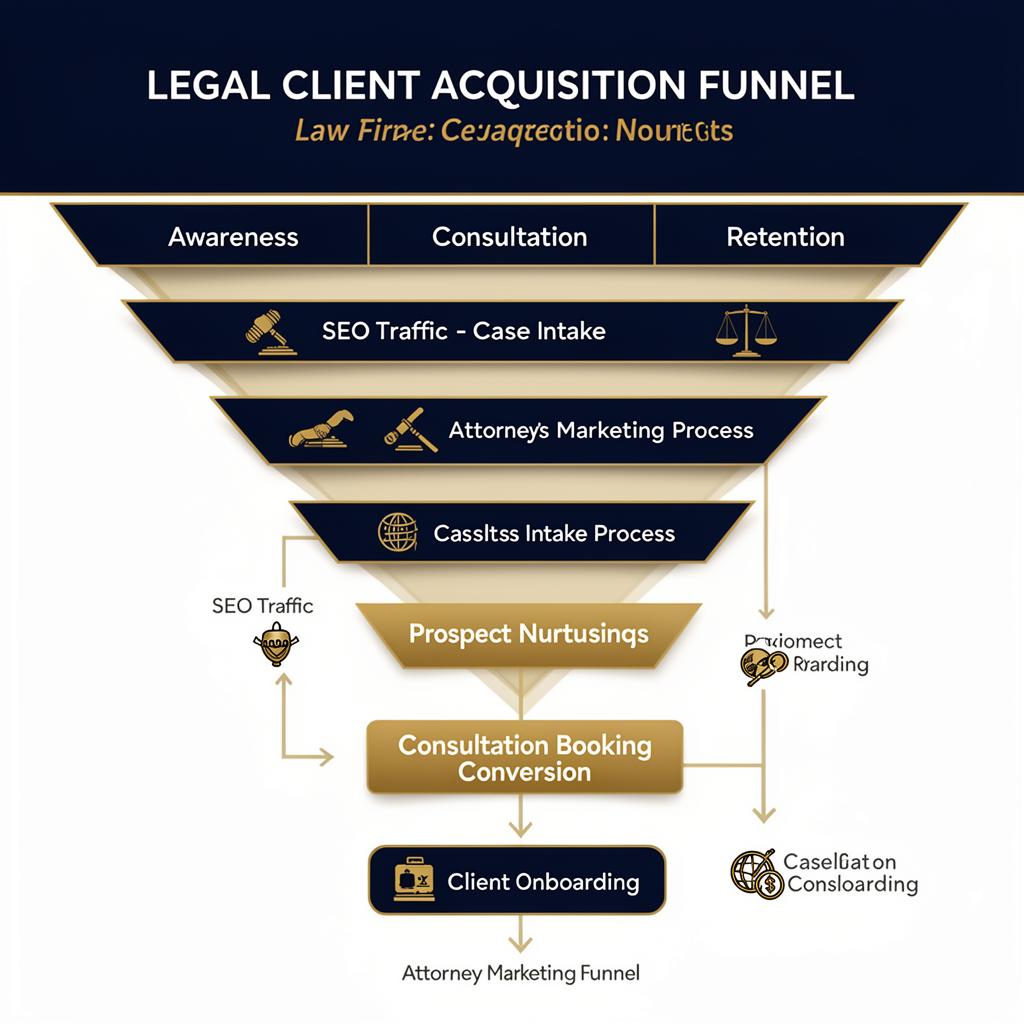
Awareness Stage: Attracting Potential Clients
At the top of the funnel, focus on visibility and initial trust:
- SEO content - Ranking for informational and early-stage research queries
- Local visibility - Google Business Profile, local pack rankings
- Social proof - Reviews, ratings, media mentions
- Referral signals - Citations from legal resources and directories
Consideration Stage: Building Confidence
Once visitors land on your site, they need reasons to choose your firm:
Key Consideration Stage Elements
- Attorney profiles with photos, credentials, and experience
- Case results and testimonials (with disclaimers)
- Clear explanation of your approach and process
- Practice area expertise demonstrated through content
- Trust signals (awards, memberships, certifications)
Decision Stage: Converting to Consultations
Optimize the final conversion with clear, accessible calls to action:
Conversion Rate Optimization for Law Firms
- Multiple contact methods - Phone, form, chat, scheduling tool
- 24/7 availability signals - Especially for emergency practice areas
- Free consultation offers - Clear value proposition for taking action
- Intake forms - Streamlined, mobile-friendly case evaluation forms
- Urgency indicators - Statute of limitations reminders where appropriate
Retention Stage: From Client to Advocate
Happy clients become your best marketing asset:
- Post-case follow-up for review requests
- Referral programs for past clients
- Newsletter content for staying top-of-mind
- Thank you/closure communications
Technical SEO for Attorney Websites
Law firm websites must meet high technical standards to compete effectively and provide the user experience potential clients expect.
Core Web Vitals & Performance
Speed and user experience are ranking factors and client satisfaction factors:
Technical SEO Checklist
- Largest Contentful Paint (LCP) under 2.5 seconds
- First Input Delay (FID) under 100 milliseconds
- Cumulative Layout Shift (CLS) under 0.1
- Mobile-first responsive design
- HTTPS security (essential for client trust)
- Accessible design (ADA compliance considerations)
Schema Markup for Law Firms
Structured data helps search engines understand your legal practice:
- LocalBusiness/Attorney - NAP information, hours, service areas
- Organization - Firm-level information and branding
- Person - Individual attorney profiles
- FAQPage - Frequently asked questions content
- Review - Client testimonials (where compliant)
- Service - Practice areas and legal services offered
Mobile Optimization
With 60%+ of legal searches happening on mobile devices, mobile optimization is critical:
- Click-to-call buttons prominently displayed
- Mobile-friendly intake forms
- Fast loading on mobile networks
- Thumb-friendly navigation and CTAs
- Readable content without zooming
Measuring Legal SEO Success
Effective measurement goes beyond rankings to track the metrics that matter for firm growth.
Key Performance Indicators
Traffic Metrics
- Organic sessions by practice area
- Local pack impressions and clicks
- Mobile vs. desktop traffic
Engagement Metrics
- Time on practice area pages
- Pages per session
- Bounce rate by landing page
Conversion Metrics
- Contact form submissions
- Phone calls (tracked)
- Consultation bookings
Revenue Metrics
- Cases signed from organic
- Revenue per lead source
- Client acquisition cost
Attribution for Legal Services
Legal client journeys often involve multiple touchpoints over extended timeframes:
- Implement call tracking with source attribution
- Use CRM integration to track lead-to-client conversion
- Consider multi-touch attribution models
- Track assisted conversions in Google Analytics
Conclusion: Building a Sustainable Legal SEO Strategy
Legal services SEO requires a comprehensive approach that balances ethical compliance, technical excellence, and user-focused content. The firms that succeed are those that:
- Prioritize E-E-A-T signals throughout their digital presence
- Maintain strict compliance with state bar advertising rules
- Create genuinely helpful content that serves potential clients
- Optimize the complete client acquisition funnel
- Continuously measure and improve performance
The investment in legal SEO pays dividends over time, creating a sustainable source of qualified leads that complements referral networks and other marketing channels.
Ready to Transform Your Law Firm's Digital Presence?
Our team specializes in ethical, effective SEO strategies for law firms across all practice areas. Schedule a consultation to discuss your firm's unique needs and competitive landscape.
Request Your Free SEO Audit