In the competitive landscape of legal services, effective marketing is essential for growth. However, unlike most industries, law firms operate under a stringent set of regulations governing how they can advertise their services. Navigating these attorney advertising rules is not merely a formality; it's a critical component of legal marketing compliance that safeguards the public and maintains the integrity of the legal profession. Failing to adhere to these guidelines can lead to severe penalties, from fines and public reprimands to suspension or even disbarment.
This comprehensive guide will delve into the intricacies of lawyer marketing regulations, providing insights into general principles, common pitfalls, and strategies for compliant legal advertising. We will explore the foundational ABA Model Rules, examine specific state bar advertising requirements, and offer practical advice for a variety of marketing channels.
Understanding the Foundation: ABA Model Rules of Professional Conduct
While each state ultimately sets its own bar association rules, the American Bar Association (ABA) Model Rules of Professional Conduct serve as the bedrock for most jurisdictions. Specifically, Rules 7.1 through 7.5 address lawyer advertising and solicitation. These rules aim to prevent misleading communication, protect potential clients, and uphold the dignity of the profession.
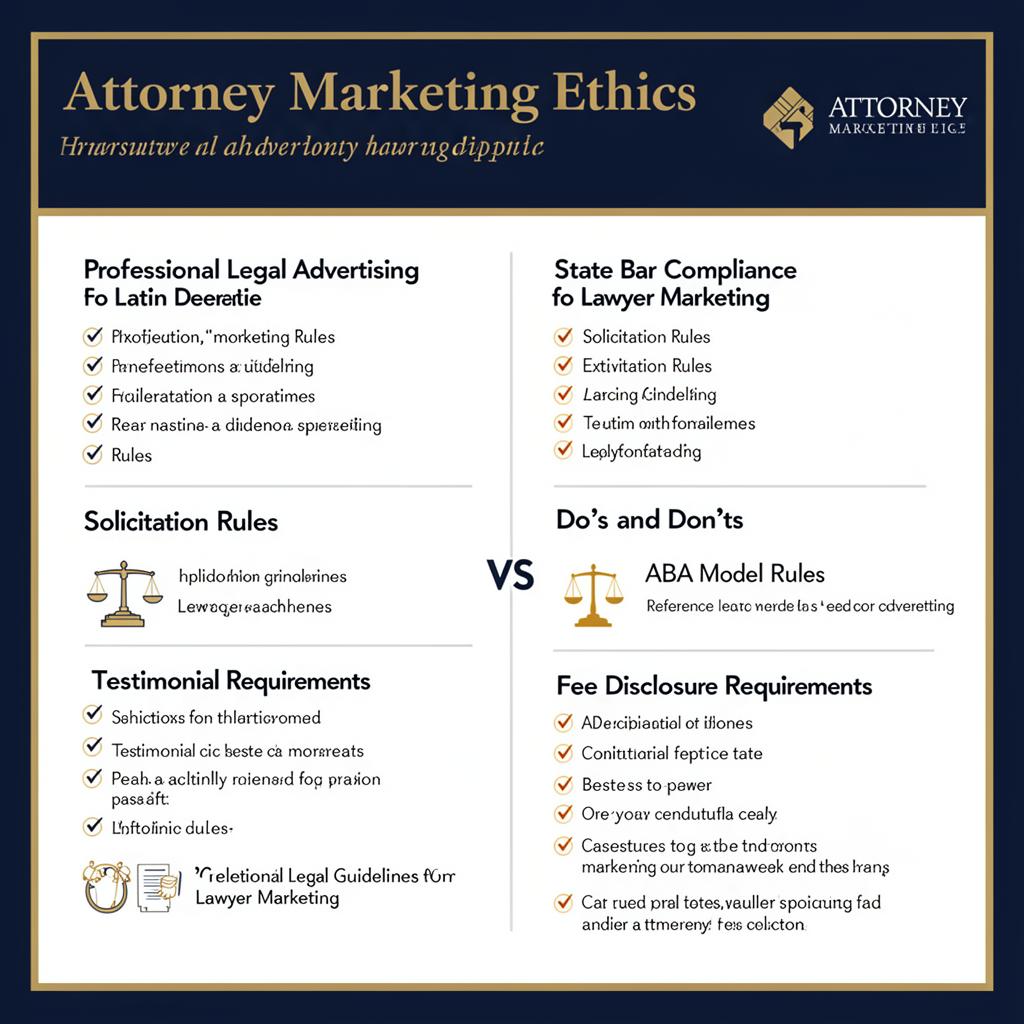
Key principles embedded in the ABA Model Rules include:
- Rule 7.1: Communications Concerning a Lawyer's Services: This rule prohibits lawyers from making false or misleading communications about themselves or their services. A communication is considered false or misleading if it contains a material misrepresentation of fact or law, or omits a fact necessary to make the statement, considered as a whole, not materially misleading.
- Rule 7.2: Advertising: This rule generally permits lawyers to advertise through written, recorded, or electronic communication, including public media. However, it mandates that any such advertising must comply with Rule 7.1.
- Rule 7.3: Solicitation of Clients: This rule generally prohibits in-person, live telephone, or real-time electronic contact with prospective clients where the lawyer's motive is pecuniary gain, unless the person contacted is a close friend, family member, or former client.
- Rule 7.4: Communication of Fields of Practice and Specialization: This rule allows lawyers to state that they practice in certain fields but places strict limits on claims of specialization.
- Rule 7.5: Firm Names and Letterheads: This rule governs the use of firm names, trade names, and letterheads, ensuring they are not misleading.
It's crucial to remember that the ABA Model Rules are models and not binding law until adopted by a state's highest court or legislature. Therefore, a deep understanding of your specific state's adaptations is paramount for legal marketing compliance.
Common Violations in Lawyer Marketing and How to Avoid Them
Even with good intentions, law firms can inadvertently stumble into legal advertising ethics violations. Awareness of these common pitfalls can significantly reduce risk.
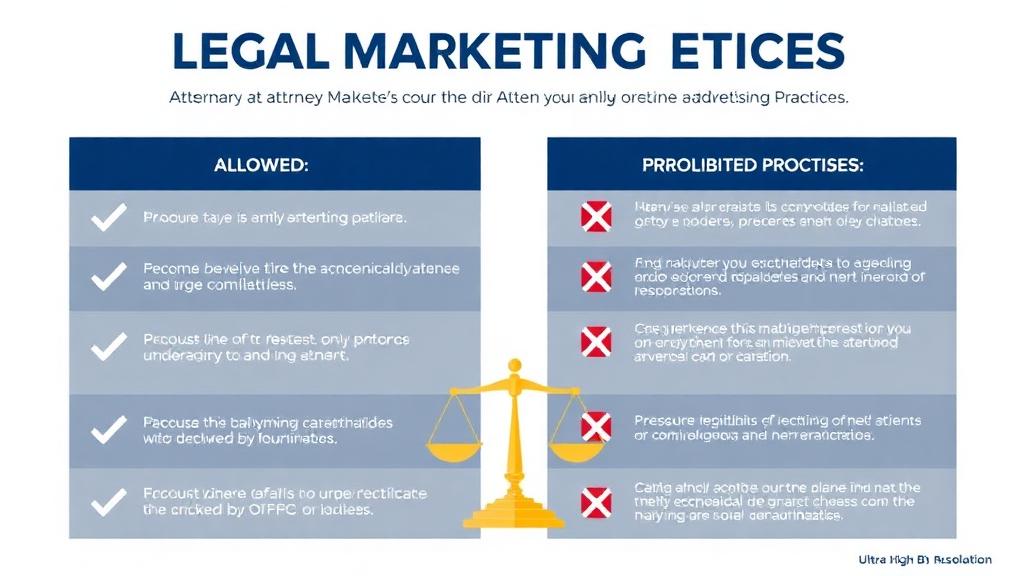
Misleading or Deceptive Statements
This is perhaps the most frequent transgression. Examples include:
- Guarantees of success: Phrases like "We guarantee you'll win your case!" are strictly prohibited as they create unjustified expectations.
- Comparisons without substantiation: Stating "We are the best personal injury lawyers in the city" without objective, verifiable proof is often disallowed.
- Misleading testimonials: While testimonials are generally permitted, they must not create unjustified expectations or imply guaranteed results.
- Omission of material facts: Failing to mention contingencies, potential fees, or other costs that could impact a client's decision.
Compliance Strategy: Be meticulously honest and transparent. Always err on the side of caution. If a statement could be interpreted as misleading, rephrase it.
Unjustified Expectations and "Results May Vary"
Many states, following ABA Rule 7.1, prohibit advertising that creates "unjustified expectations about the results the lawyer can achieve." This often applies to past results.
Compliance Strategy: When featuring past successes, use clear disclaimers such as: "Past results do not guarantee future outcomes. Each case is unique and must be judged on its own merits."
Improper Solicitation
Direct, in-person, or real-time electronic solicitation of prospective clients for pecuniary gain is heavily regulated.
Compliance Strategy: Avoid cold-calling or emailing individuals you don't have a prior relationship with for the purpose of seeking new clients. Understand the specific rules in your state regarding direct mail and targeted advertising.
Lack of Necessary Disclaimers
Many advertisements require specific disclaimers, especially regarding specialization, past results, and jurisdictional limitations.
Compliance Strategy: Keep a comprehensive list of all required disclaimers for your jurisdiction. Ensure they are prominently displayed and easily legible in all advertisements.
Compliant Marketing Strategies for Law Firms
Despite the regulations, numerous effective and compliant law firm advertising strategies exist.
Website Compliance and SEO
Your firm's website is often the first point of contact for potential clients and is subject to the same attorney advertising rules.
- Clear Disclosures: Ensure all necessary disclaimers are conspicuously placed, often in the footer or on specific practice area pages.
- Jurisdictional Statements: Clearly state the jurisdictions in which your attorneys are licensed to practice.
- Attorney Profiles: Provide accurate and up-to-date information on attorney qualifications, education, and experience.
- Testimonials and Reviews: If you feature testimonials, ensure they are genuine and accompanied by required disclaimers. Do not offer incentives for reviews.
- Privacy Policy: A clear privacy policy is crucial, especially regarding data collection.
Social Media Guidelines
Social media platforms are powerful tools, but they require careful navigation under bar association rules.
- Transparency: Clearly identify yourself as an attorney and your affiliation with your firm.
- Professional Conduct: Maintain a professional tone. Avoid disparaging remarks or confidential client information.
- Disclaimer for Legal Advice: Always include a disclaimer stating that posts are for informational purposes only and do not constitute legal advice.
- Endorsements: Be cautious about "liking" or "sharing" content that could be interpreted as an endorsement of specific outcomes.
Testimonial Rules
Testimonials are powerful, but their use is highly regulated.
- Authenticity: Testimonials must be genuine and from actual clients.
- No False Expectations: They should not create unjustified expectations about results. Disclaimers are almost always required.
- No Solicitation for Pecuniary Gain: Do not pay clients for testimonials.
State-Specific Regulations: A Closer Look
While the ABA Model Rules provide a framework, individual state bars interpret and adapt these rules, sometimes with significant variations.
California
California, through its State Bar Rules of Professional Conduct, is known for its detailed and often stricter regulations.
- Specificity in Advertising: California often requires more specific information in ads, such as the full name and address of the lawyer responsible.
- Contingency Fee Disclosures: Detailed disclosures are mandated for contingency fee arrangements.
- Certified Specialists: Strict rules dictate how lawyers can hold themselves out as certified specialists.
- No Guarantees or Warranties: Explicit prohibitions against statements that guarantee or warrant a specific outcome.
New York
New York's Rules of Professional Conduct are also quite prescriptive.
- "Attorney Advertising" Label: Many advertisements are required to be labeled "Attorney Advertising" at the beginning and end.
- Pop-up Ads: Specific rules govern pop-up advertisements on websites.
- Domain Names: Rules apply to the use of domain names that could be misleading.
- Referral Fees: Strict rules on referral fees and fee splitting.
Texas
The Texas Disciplinary Rules of Professional Conduct guide advertising in the state.
- Review and Filing Requirements: Texas has a unique system where many advertisements must be filed with the State Bar's Advertising Review Committee for review before publication.
- Area of Practice Designations: Rules govern how lawyers can state their areas of practice and specialization.
- Mandatory Disclaimers: Specific mandatory disclaimers for various types of advertisements.
Florida
Florida's Rules Regulating The Florida Bar are highly detailed in their approach to lawyer marketing regulations.
- Mandatory Review/Filing: Similar to Texas, Florida has comprehensive rules regarding the filing of advertisements with The Florida Bar for review prior to dissemination.
- Minimum Font/Display Requirements: Specific rules on the font size, color contrast, and duration of disclaimers in video and print ads.
- Puffery and Self-Laudatory Statements: Prohibitions against statements that are self-laudatory or compare services without objective verification.
Always Consult State Resources: For any jurisdiction, the most accurate and up-to-date information will always be found on the respective State Bar's website.
The Role of Internal Compliance and Training
Effective legal marketing compliance isn't just about knowing the rules; it's about embedding them into your firm's operational DNA.
- Designated Compliance Officer: Consider appointing an attorney responsible for overseeing all marketing initiatives.
- Regular Training: Conduct periodic training sessions for all staff involved in marketing.
- Review Process: Implement a rigorous internal review process for all outbound marketing materials before they are published.
- Documentation: Maintain records of all advertisements, their publication dates, and any associated approvals or disclaimers.
Conclusion: Building Trust Through Compliance
Navigating the complex world of legal marketing compliance is a continuous challenge, but it's one that every law firm must embrace. Adhering to state bar advertising requirements and legal advertising ethics isn't just about avoiding penalties; it's about building trust with potential clients and upholding the integrity of the legal profession.
By understanding the ABA Model Rules, being mindful of common violations, adopting compliant marketing strategies, and meticulously reviewing state-specific regulations, your firm can effectively market its services while safeguarding its reputation.
Ready to ensure your legal marketing is fully compliant and effective? ZORO Marketing specializes in navigating the intricate landscape of lawyer marketing regulations. Contact us today for an audit of your current marketing efforts and a tailored strategy to achieve growth while maintaining impeccable legal marketing compliance.