
Healthcare SEO presents unique challenges that no other industry faces. Between strict HIPAA regulations, Google's heightened scrutiny of medical content through YMYL (Your Money or Your Life) guidelines, and the critical nature of patient acquisition, medical practices need specialized SEO strategies that balance visibility with compliance.
Key Takeaways
- ✓ 77% of patients use search engines before booking medical appointments
- ✓ HIPAA-compliant SEO strategies can increase patient leads by 200%+
- ✓ Local SEO drives 46% of all healthcare searches
- ✓ E-E-A-T signals are critical for medical content rankings
1. The Healthcare SEO Landscape in 2025
The healthcare industry has undergone a digital transformation that shows no signs of slowing. Patients today research symptoms, treatments, and providers online before ever picking up the phone. For medical practices, this shift creates both opportunity and obligation.
of patients research online before booking
of all Google searches have local intent
trust online reviews as much as referrals
Why Healthcare SEO Is Different
Unlike e-commerce or SaaS SEO, healthcare marketing operates under strict regulatory oversight. Google applies heightened scrutiny to medical content through its YMYL (Your Money or Your Life) classification, meaning healthcare websites must demonstrate exceptional expertise, authoritativeness, and trustworthiness.
⚠️ YMYL Warning
Healthcare content falls under Google's strictest quality guidelines. Inaccurate medical information can directly harm users, so Google applies extra scrutiny to health-related search results. Low-quality healthcare content will be suppressed regardless of other SEO factors.
2. HIPAA Compliance in SEO: What You Must Know
The Health Insurance Portability and Accountability Act (HIPAA) governs how Protected Health Information (PHI) must be handled. While SEO itself doesn't directly involve patient records, many SEO activities can inadvertently create compliance risks.
HIPAA-Compliant SEO Practices
| SEO Activity | HIPAA Risk | Compliant Approach |
|---|---|---|
| Patient Testimonials | High - reveals patient identity and treatment | Written consent required; use general satisfaction reviews |
| Case Studies | High - contains PHI | De-identify completely; obtain written authorization |
| Before/After Photos | High - identifies patients | HIPAA authorization form; written consent for marketing use |
| Form Submissions | Medium - collects health info | SSL encryption; BAA with form providers; minimize data collection |
| Analytics Tracking | Medium - can track health-related behavior | IP anonymization; no PHI in URLs; BAA-compliant analytics |
| Remarketing Pixels | High - reveals health conditions | Avoid health-condition-based audiences; use general site visitors only |
Business Associate Agreements (BAAs)
Any third-party tool that may access PHI requires a signed BAA. This includes analytics platforms, CRM systems, email marketing tools, and even your website hosting provider. Ensure all marketing technology vendors can provide HIPAA-compliant agreements.
3. Mapping the Patient Journey for SEO
Effective healthcare SEO requires understanding how patients search at each stage of their healthcare journey. The modern patient journey typically spans multiple touchpoints before a booking decision is made.
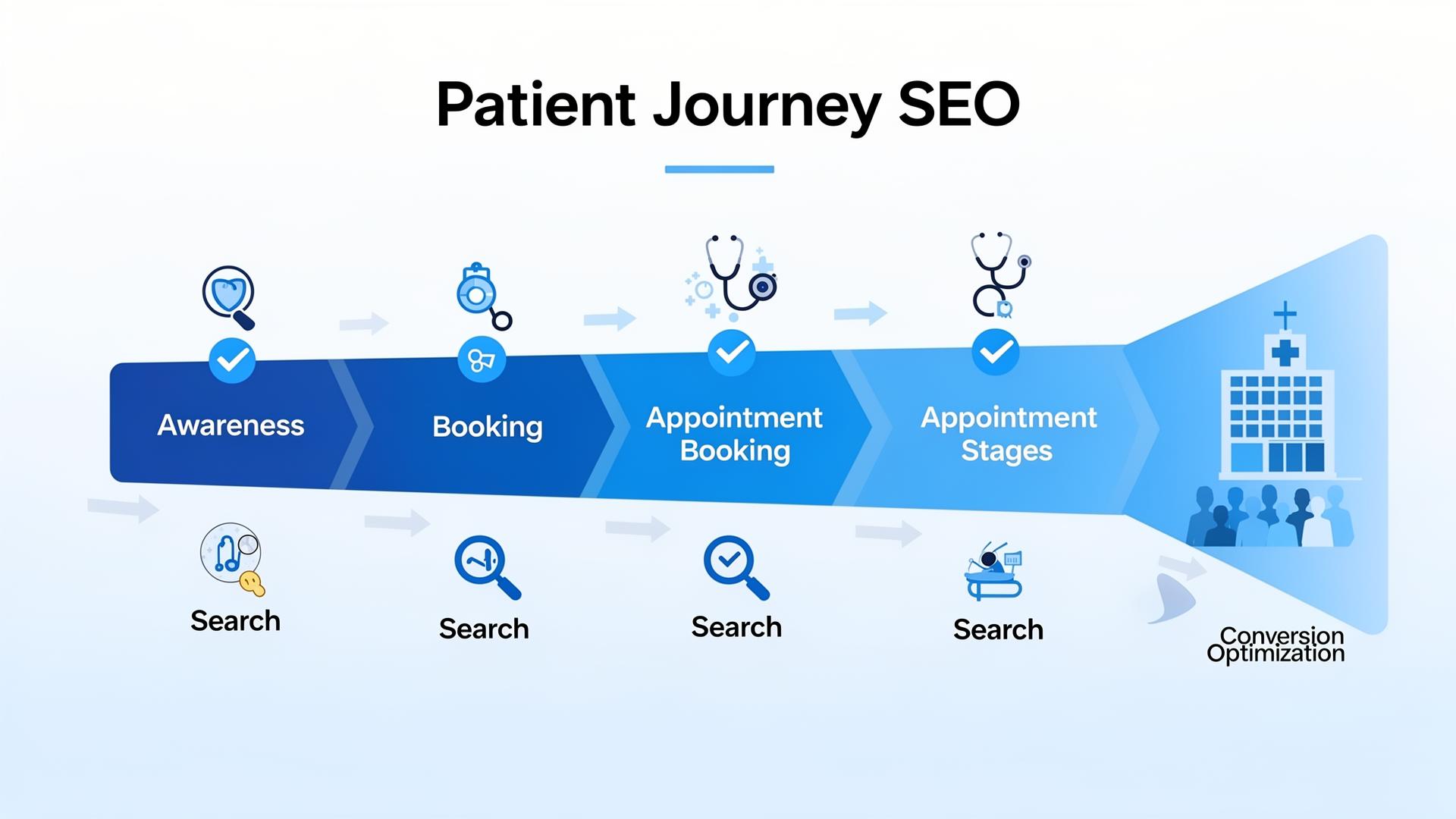
Search Intent by Patient Journey Stage
🔍 Awareness Stage
Patient experiences symptoms and seeks information
- • "Why does my knee hurt when I walk"
- • "Signs of diabetes symptoms"
- • "Is back pain serious"
- • Symptom explainer articles
- • Condition overview pages
- • Educational blog posts
📋 Consideration Stage
Patient researches treatment options and providers
- • "Best orthopedic surgeon near me"
- • "Knee replacement vs. physical therapy"
- • "Dr. Smith reviews [city]"
- • Provider profile pages
- • Treatment comparison guides
- • Patient testimonials
📅 Decision Stage
Patient is ready to book an appointment
- • "[Practice name] phone number"
- • "Book appointment [specialty] [city]"
- • "[Doctor name] accepting new patients"
- • Contact/booking pages
- • Insurance accepted pages
- • New patient information
4. Local SEO for Medical Practices
Local SEO is arguably the most critical component of healthcare marketing. When patients search for medical services, they're almost always looking for nearby providers. Appearing in the local pack and map results can drive significant patient volume.
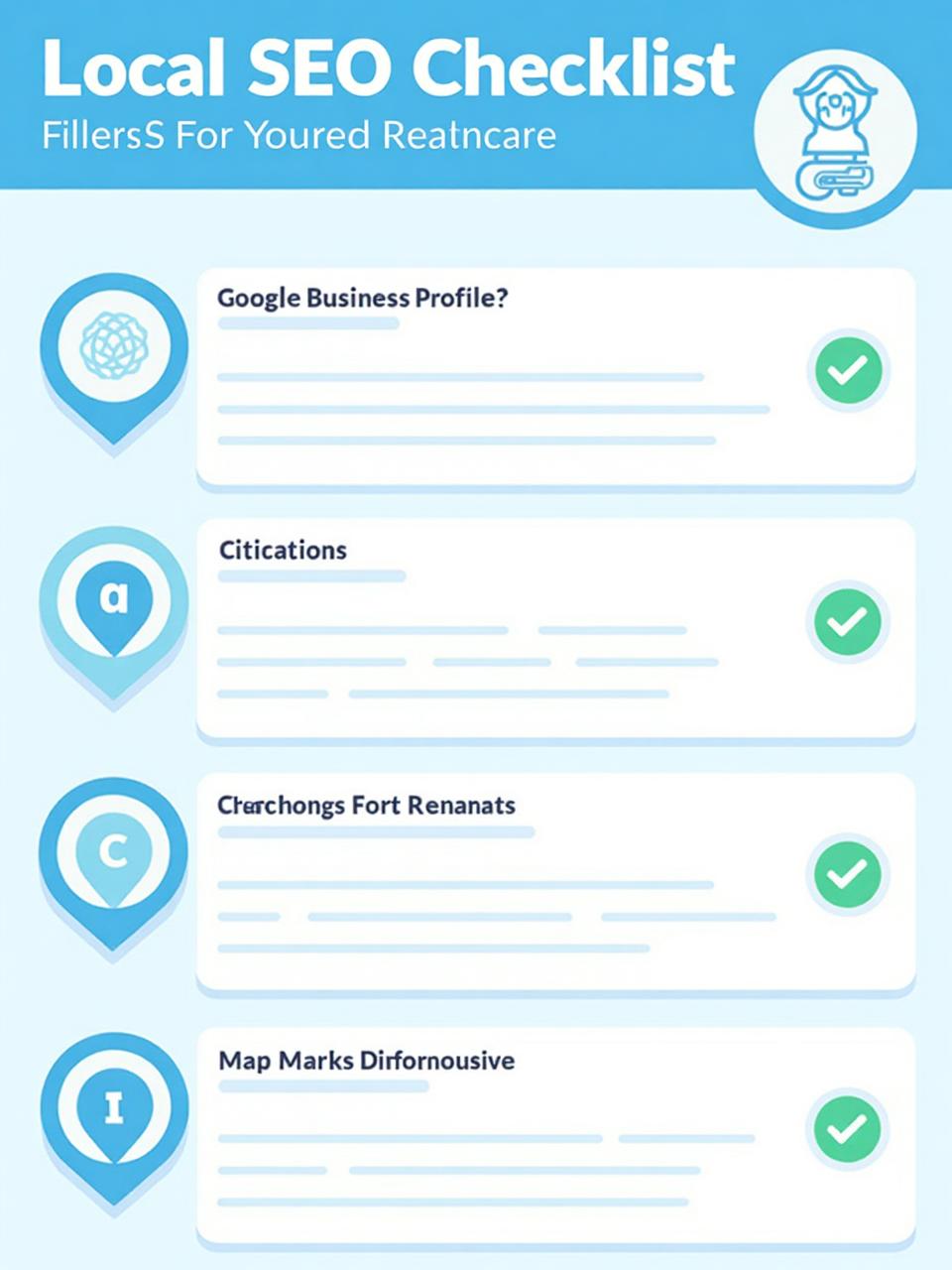
Google Business Profile Optimization
Your Google Business Profile (GBP) is the foundation of local healthcare SEO. A fully optimized profile significantly improves your chances of appearing in the coveted local 3-pack.
GBP Optimization Checklist for Healthcare
- ✓ Complete NAP (Name, Address, Phone)
- ✓ Select all relevant medical categories
- ✓ Add comprehensive service descriptions
- ✓ Upload high-quality facility photos
- ✓ List all accepted insurance plans
- ✓ Enable appointment booking
- ✓ Respond to all patient reviews
- ✓ Post regular updates and health tips
- ✓ Add provider credentials and bios
- ✓ Include accessibility information
Managing Patient Reviews
Patient reviews are a critical local ranking factor and influence patient decision-making. However, healthcare review management requires extra care due to HIPAA considerations.
✓ DO
- • Respond to all reviews professionally
- • Thank patients for positive feedback
- • Keep responses general and HIPAA-safe
- • Encourage satisfied patients to leave reviews
- • Address concerns without confirming patient status
✗ DON'T
- • Confirm anyone is a patient in responses
- • Discuss treatments or diagnoses publicly
- • Offer to continue conversations about care
- • Ignore negative reviews entirely
- • Get defensive or argumentative
HIPAA-Safe Review Response Template
"Thank you for taking the time to share your experience. We strive to provide excellent care to everyone who visits our practice. If you have any concerns you'd like to discuss privately, please call our office directly at [phone number]."
5. E-E-A-T for Healthcare Content
Google's E-E-A-T framework (Experience, Expertise, Authoritativeness, Trustworthiness) is especially critical for healthcare content. Medical practices must demonstrate credibility through multiple signals to rank well for health-related queries.
Building E-E-A-T Signals
👨⚕️ Experience
Demonstrate real-world medical experience
- • Years of practice and patient outcomes
- • Case studies (HIPAA-compliant)
- • Specialty certifications and fellowships
- • Hospital affiliations and privileges
🎓 Expertise
Showcase medical credentials and knowledge
- • Board certifications prominently displayed
- • Medical school and residency information
- • Continuing education and training
- • Published research and medical papers
🏆 Authoritativeness
Establish industry recognition and trust
- • Professional association memberships
- • Awards and recognitions
- • Media mentions and expert quotes
- • Speaking engagements and conferences
🔒 Trustworthiness
Build patient confidence and credibility
- • HIPAA compliance statements
- • Transparent pricing information
- • Patient reviews and testimonials
- • Clear contact and location information
Author Bylines and Medical Review
Every piece of medical content should include author attribution and, ideally, medical review by a qualified healthcare professional.
Recommended Author Box Format
Dr. Jane Smith, MD, FACP
Board-Certified Internal Medicine | 15+ Years Experience
Dr. Smith is a practicing internist at [Hospital Name] and clinical professor at [Medical School]. She specializes in preventive care and chronic disease management.
Medically reviewed: [Date] | Sources: [Number] peer-reviewed references
6. Healthcare Content Strategy
Creating content for healthcare requires balancing patient education with search optimization while maintaining medical accuracy and regulatory compliance.
Content Types That Drive Patient Acquisition
| Content Type | Purpose | SEO Value |
|---|---|---|
| Condition Pages | Educate patients about specific health conditions | High - target symptom and condition searches |
| Treatment Pages | Explain procedures and treatment options | High - capture comparison and "how to" searches |
| Provider Profiles | Build trust and showcase expertise | Medium - target doctor name searches |
| Location Pages | Capture local "near me" searches | High - essential for multi-location practices |
| FAQ Pages | Answer common patient questions | Medium - featured snippet opportunities |
| Blog Articles | Provide health tips and news | Medium - builds topical authority |
Medical Content Best Practices
-
1.
Cite authoritative sources - Link to peer-reviewed studies, medical journals, and official health organizations (NIH, CDC, WHO)
-
2.
Use clear, accessible language - Write at an 8th-grade reading level while maintaining medical accuracy
-
3.
Include medical review dates - Show when content was last reviewed by a medical professional
-
4.
Add appropriate disclaimers - Remind readers to consult their physician for personalized advice
-
5.
Update regularly - Medical information changes; schedule regular content audits
7. Technical SEO for Healthcare Websites
Healthcare websites often have complex structures with multiple providers, locations, and services. Technical SEO ensures search engines can efficiently crawl and index this content.
Healthcare Schema Markup
Structured data helps search engines understand your medical content and can enable rich results in search.
Essential Schema Types for Healthcare
{
  "@context": "https://schema.org",
  "@type": "MedicalBusiness",
  "name": "Your Practice Name",
  "medicalSpecialty": "Orthopedics",
  "physician": {
    "@type": "Physician",
    "name": "Dr. John Smith",
    "medicalSpecialty": "Orthopedic Surgery"
  },
  "address": {
    "@type": "PostalAddress",
    "streetAddress": "123 Medical Center Dr",
    "addressLocality": "City",
    "addressRegion": "State",
    "postalCode": "12345"
  },
  "openingHours": "Mo-Fr 08:00-17:00",
  "telephone": "+1-555-123-4567"
}
Site Speed and Core Web Vitals
Patient experience begins with your website. Slow-loading pages lead to abandoned visits and lower rankings.
8. Measuring Healthcare SEO Success
Tracking the right metrics helps you understand what's working and where to focus your optimization efforts.
Key Performance Indicators
Traffic Metrics
- • Organic search traffic growth
- • Local pack impressions and clicks
- • Keyword rankings for target terms
- • New vs. returning visitors
Conversion Metrics
- • Appointment request submissions
- • Phone call tracking
- • Contact form completions
- • Patient portal signups
Engagement Metrics
- • Time on page for condition content
- • Pages per session
- • Bounce rate by page type
- • Scroll depth on key pages
Local SEO Metrics
- • Google Business Profile views
- • Direction requests
- • Review volume and rating
- • Local pack position tracking
Start Your Healthcare SEO Journey
Ready to attract more patients while maintaining strict HIPAA compliance? Our healthcare SEO specialists understand the unique challenges of medical marketing.