
Financial services face unique SEO challenges. As a YMYL (Your Money, Your Life) industry, Google holds financial content to the highest standards. This comprehensive guide reveals how leading financial institutions achieve top rankings while maintaining regulatory compliance and building the trust signals that convert visitors into clients.
Understanding YMYL: Why Financial SEO Is Different
Google's YMYL (Your Money, Your Life) classification applies to content that could significantly impact a person's financial stability, health, or safety. Financial services fall squarely into this category, meaning your content faces heightened scrutiny from Google's quality raters.
⚠️ YMYL Implications for Financial Services
- Higher Quality Thresholds: Content must demonstrate exceptional accuracy and expertise
- E-E-A-T Requirements: Authors must have verifiable credentials and experience
- Trust Signals: Sites need robust security, transparency, and reputation indicators
- Regular Updates: Financial information must be current and accurately maintained
What Makes Financial Content YMYL?
Google specifically identifies these financial topics as YMYL:
- Investment advice - Stock recommendations, portfolio strategies, retirement planning
- Banking information - Account comparisons, loan advice, credit guidance
- Insurance content - Policy recommendations, coverage advice, claims information
- Tax guidance - Deduction strategies, filing advice, tax planning
- Major financial decisions - Home buying, education funding, debt management
E-E-A-T Framework: Building Authority in Financial Content
E-E-A-T stands for Experience, Expertise, Authoritativeness, and Trustworthiness. For financial services, this framework isn't optional—it's the foundation of your SEO strategy.
Experience: First-Hand Financial Knowledge
Google now evaluates whether content creators have real-world experience with the topics they cover. For financial content, this means:
- Authors who have actually worked in financial services
- Case studies featuring real client outcomes (anonymized appropriately)
- Practical insights that could only come from hands-on experience
- Personal financial journey stories that add authentic perspective
Expertise: Demonstrable Financial Credentials
Credential Signals That Matter:
- Professional Certifications: CFA, CFP, CPA, Series 7/66, ChFC
- Educational Background: Relevant degrees and continuing education
- Regulatory Registrations: SEC, FINRA, state registrations
- Industry Experience: Years of practice, specializations, notable positions
- Published Work: Books, research papers, industry publications
Authoritativeness: Industry Recognition
Authority in financial services comes from:
- Media mentions in respected financial publications (WSJ, Bloomberg, Forbes)
- Speaking engagements at industry conferences
- Expert quotes and citations from other authoritative sources
- Awards and recognition from industry bodies
- Quality backlinks from financial news sites and educational institutions
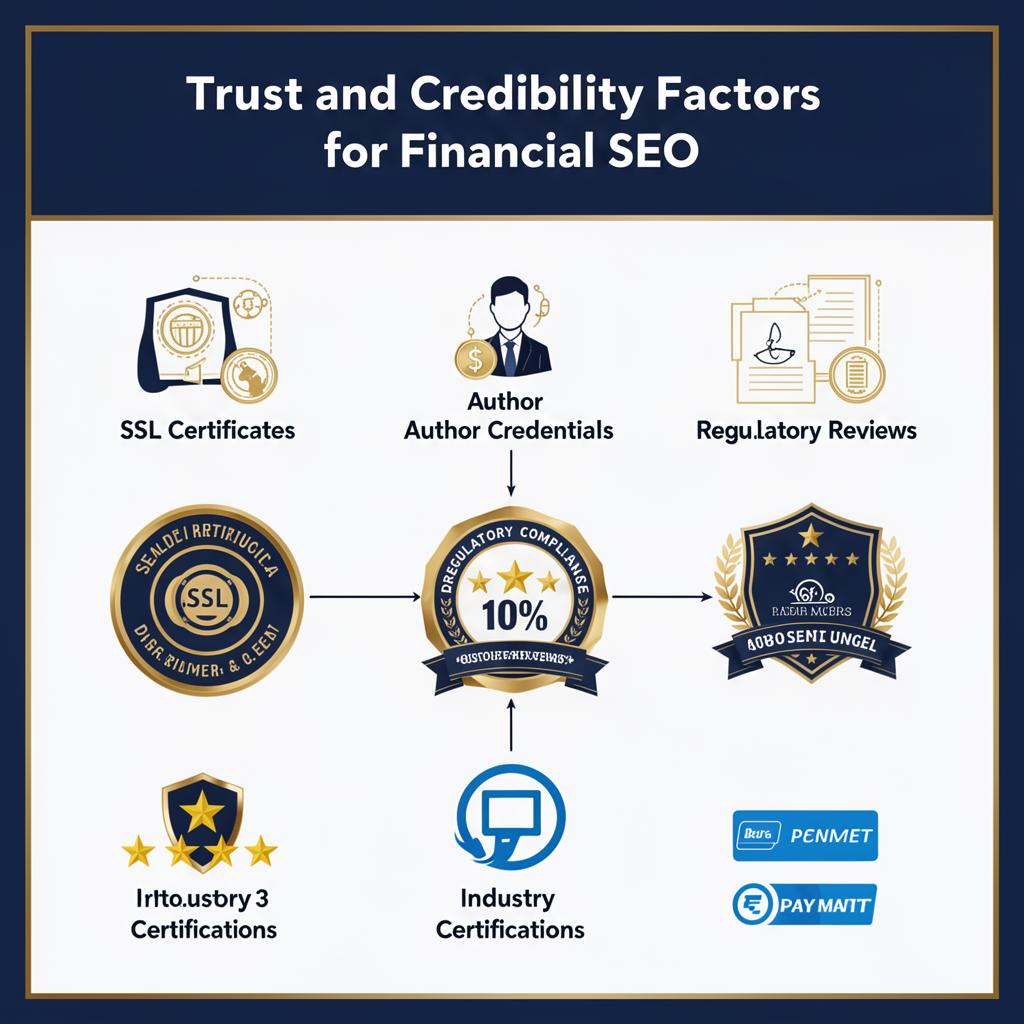
Trustworthiness: The Foundation of Financial SEO
Trust is paramount in financial services. Google evaluates trust through:
🔒 Security Signals
- HTTPS with valid SSL certificate
- Clear privacy policy
- Secure data handling practices
- PCI compliance for payments
📋 Transparency Signals
- Clear contact information
- About page with team bios
- Fee disclosure statements
- Regulatory disclosures
⭐ Reputation Signals
- BBB accreditation
- Client testimonials
- Third-party reviews
- Industry ratings
YMYL Compliance Framework
Creating YMYL-compliant financial content requires a systematic approach. Here's our proven framework:
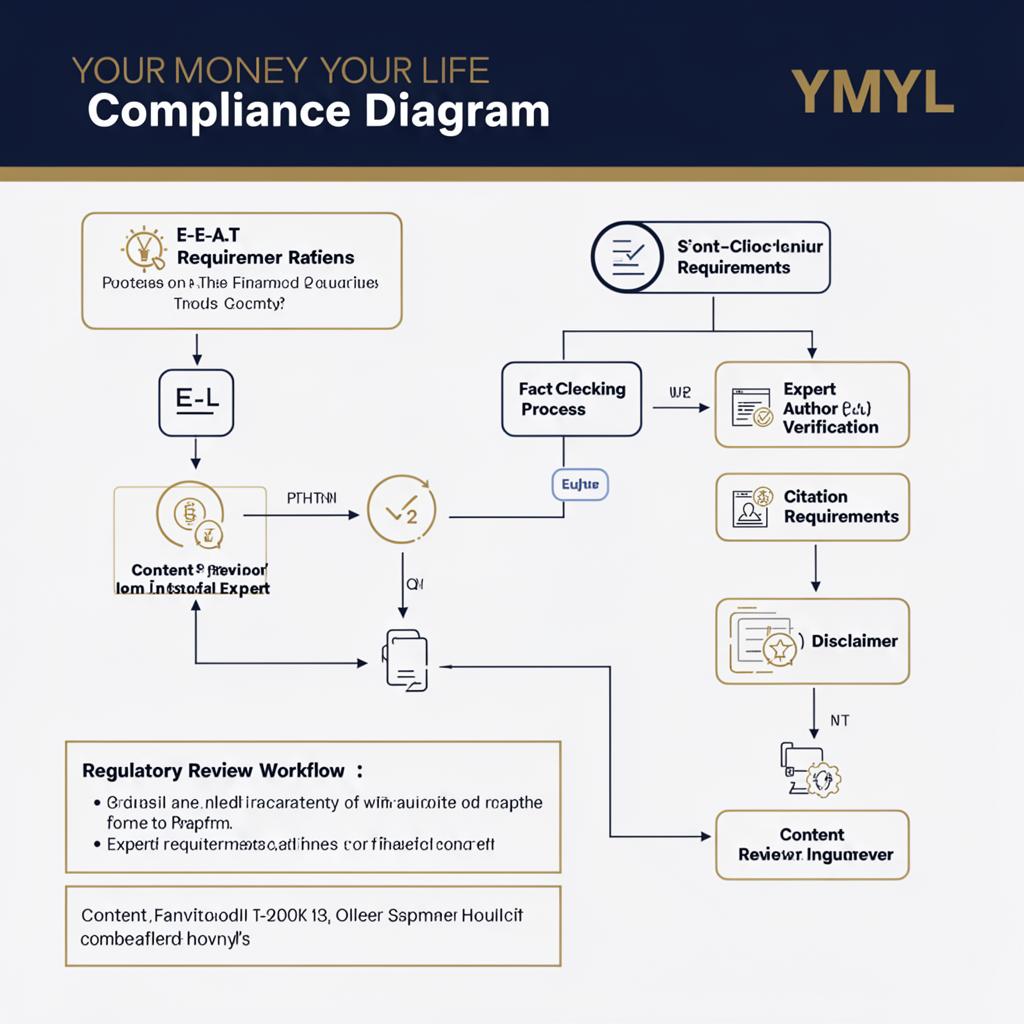
Step 1: Content Planning & Expert Assignment
Before creating any financial content:
- Identify qualified subject matter experts (SMEs) with verifiable credentials
- Review current regulatory requirements for the topic
- Research authoritative sources for citations
- Plan for legal/compliance review
Step 2: Content Creation Standards
✅ YMYL Content Checklist
- ☑️ Clear author attribution with credentials
- ☑️ Last updated date prominently displayed
- ☑️ Sources cited with links to authoritative references
- ☑️ Regulatory disclaimers where required
- ☑️ Fact-checked by qualified reviewer
- ☑️ Balanced perspective (not promotional)
- ☑️ Actionable but appropriately cautious advice
Step 3: Required Disclaimers
Financial content typically requires these disclaimers:
Example Disclaimer: "This content is for informational purposes only and should not be considered financial advice. Consult with a qualified financial advisor before making investment decisions. Past performance does not guarantee future results."
Step 4: Review & Maintenance
- Initial Review: Compliance officer sign-off before publication
- Quarterly Audits: Review all financial content for accuracy
- Market Updates: Refresh content when regulations or market conditions change
- Citation Checks: Verify all external links remain valid and authoritative
Keyword Strategy for Financial Services
Financial keywords are among the most competitive and expensive in digital marketing. A strategic approach is essential.
Keyword Categories by Intent
| Intent Type | Example Keywords | Content Strategy | Avg. CPC |
|---|---|---|---|
| Informational | "how to start investing", "what is a 401k" | Educational guides, FAQs | $8-15 |
| Comparison | "best investment apps", "Roth vs traditional IRA" | Comparison articles, reviews | $25-40 |
| Transactional | "open brokerage account", "hire financial advisor" | Service pages, CTAs | $50-100+ |
| Local | "financial advisor [city]", "CPA near me" | Local landing pages | $20-45 |
Long-Tail Keyword Opportunities
While head terms like "investment advisor" are extremely competitive, long-tail variations offer better opportunities:
"fee-only financial advisor for teachers"
"cryptocurrency tax reporting for small business"
"how to catch up on retirement savings at 50"
💡 Pro Tip: Question-Based Content
Financial content answering specific questions ("Can I contribute to both a 401k and IRA?") often ranks for multiple related queries and captures featured snippets. Use tools like AnswerThePublic and "People Also Ask" boxes to identify these opportunities.
Lead Generation Funnel Optimization
Financial services have longer sales cycles and require significant trust-building. Your SEO strategy should align content to each stage of the buyer journey.
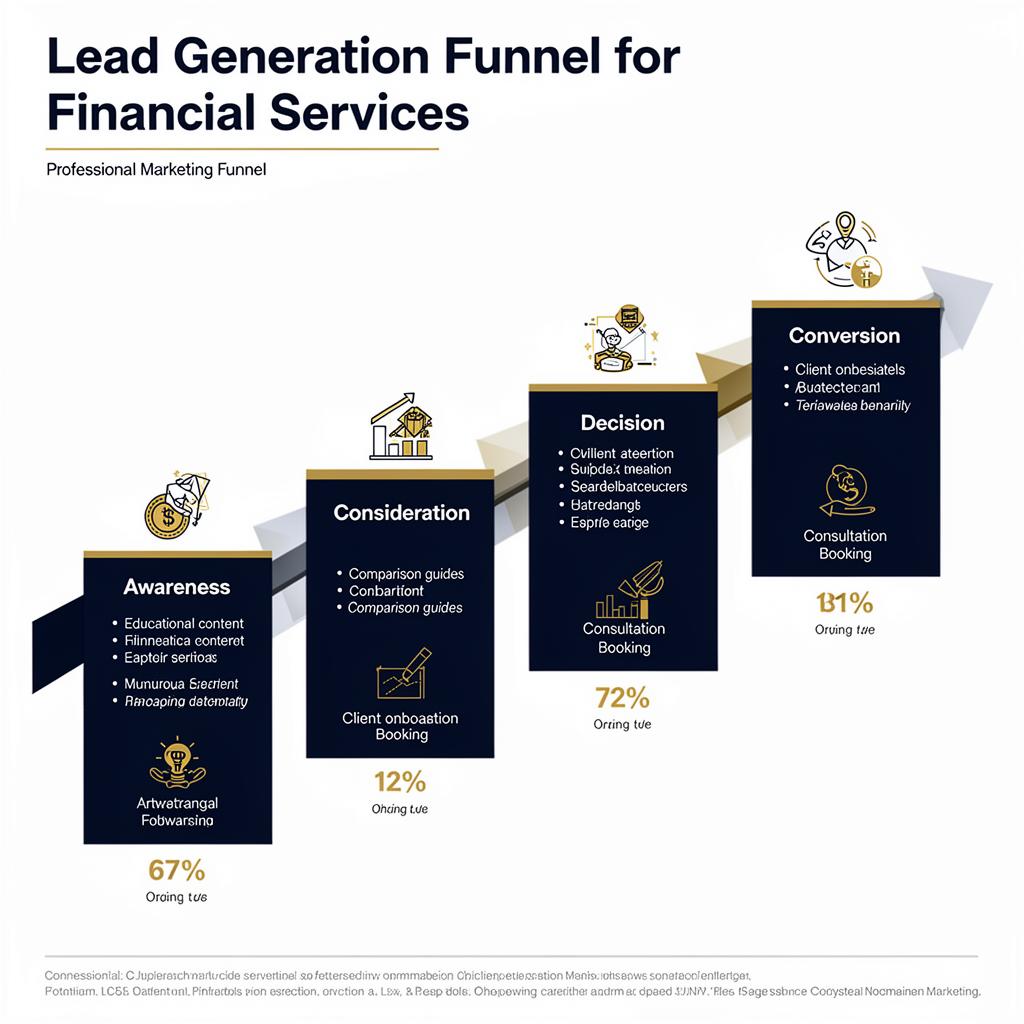
Stage 1: Awareness (Top of Funnel)
Goal: Attract prospects researching financial topics
Content Types:
- Educational blog posts ("What Is Dollar-Cost Averaging?")
- Financial calculators (retirement, mortgage, compound interest)
- Beginner's guides to investing, saving, budgeting
- Market commentary and economic updates
Stage 2: Consideration (Middle of Funnel)
Goal: Help prospects evaluate options
Content Types:
- Comparison guides ("Fee-Only vs. Commission-Based Advisors")
- Service-specific deep dives
- Webinars and educational video series
- Downloadable resources (eBooks, whitepapers, checklists)
Stage 3: Decision (Bottom of Funnel)
Goal: Convert qualified prospects
Content Types:
- Case studies with client outcomes
- Service pages with clear value propositions
- Team/advisor bio pages with credentials
- FAQ pages addressing common objections
- Free consultation landing pages
Conversion Optimization Tips
Clear CTAs
Every page should have a clear next step—schedule a consultation, download a guide, or use a calculator.
Lead Magnets
Offer valuable resources (retirement readiness checklist, tax planning guide) in exchange for contact information.
Trust Builders
Display credentials, testimonials, and regulatory badges near conversion points.
Technical SEO for Financial Websites
Financial websites face unique technical requirements driven by security, compliance, and user trust.
Security Requirements
- HTTPS Everywhere: SSL certificates are non-negotiable; consider Extended Validation (EV) certificates for enhanced trust indicators
- Security Headers: Implement HSTS, CSP, X-Frame-Options to prevent attacks
- Regular Security Audits: Quarterly penetration testing and vulnerability assessments
- PCI Compliance: If handling payments, maintain PCI DSS compliance
Structured Data for Financial Services
Implement these schema types to enhance search visibility:
{
  "@context": "https://schema.org",
  "@type": "FinancialService",
  "name": "Your Financial Firm Name",
  "description": "Fee-only financial planning services",
  "areaServed": "United States",
  "hasCredential": {
    "@type": "EducationalOccupationalCredential",
    "credentialCategory": "CFP"
  },
  "knowsAbout": ["Retirement Planning", "Investment Management"],
  "review": { ... },
  "aggregateRating": { ... }
}
Core Web Vitals Optimization
Financial websites often struggle with performance due to compliance scripts, calculators, and third-party integrations. Focus on:
- LCP (Largest Contentful Paint): Optimize hero images, defer non-critical scripts
- CLS (Cumulative Layout Shift): Reserve space for dynamic content, ads, chat widgets
- FID/INP: Optimize JavaScript for calculator tools and interactive elements
Local SEO for Financial Advisors
Many financial services rely on local clients. Local SEO is essential for advisors, CPAs, and regional banks.
Google Business Profile Optimization
- Complete all profile fields including services, appointment links, and business description
- Select accurate primary and secondary categories (Financial Planner, Investment Service, etc.)
- Add high-quality photos of your office and team
- Respond to all reviews professionally—especially negative ones
- Post regular updates about market insights, team news, and events
Local Content Strategy
Create Location-Specific Pages For:
- Each office location with unique, valuable content
- State-specific tax and financial planning information
- Local market conditions and real estate trends
- Community involvement and local sponsorships
Citation Building for Financial Services
Beyond standard local directories, ensure listings on:
- Industry Directories: NAPFA, FPA, AICPA, CFP Board
- Review Platforms: WealthManagement.com, AdvisorInfo, Paladin Registry
- Professional Networks: LinkedIn Company Page, industry associations
Regulatory Compliance in Financial Marketing
Financial marketing is heavily regulated. Your SEO efforts must comply with SEC, FINRA, state regulators, and other oversight bodies.
⚠️ Common Compliance Pitfalls
- Testimonial Rules: SEC and FINRA have strict rules about client testimonials—new SEC Marketing Rule provides some flexibility but requires compliance
- Performance Claims: Never guarantee returns or use misleading performance data
- Credential Misrepresentation: Only claim credentials you actually hold
- Missing Disclosures: All required disclaimers must be present and prominent
Compliant Content Practices
- Archive Everything: Maintain records of all marketing materials as required by regulations
- Pre-Approval Process: Establish workflow for compliance review before publication
- Regular Training: Keep marketing team updated on regulatory changes
- Third-Party Content: Ensure any guest posts or syndicated content also meet compliance standards
Measuring Financial SEO Success
Track these KPIs to measure your financial services SEO performance:
Organic Traffic Growth
Month-over-month and year-over-year organic session increases
Keyword Rankings
Position tracking for priority financial terms
Lead Quality
Consultation requests, qualified leads, AUM potential
Content Engagement
Time on page, calculator usage, resource downloads
Trust Metrics
Backlink quality, brand mentions, review ratings
Client Acquisition Cost
SEO cost per acquired client vs. other channels
Key Takeaways
Financial services SEO requires a unique approach that balances visibility with compliance and trust-building:
- YMYL Awareness: Understand that Google holds financial content to the highest standards
- E-E-A-T Focus: Demonstrate experience, expertise, authority, and trustworthiness in every piece of content
- Trust Signals: Invest in security, transparency, and reputation-building across your digital presence
- Compliant Content: Build processes to ensure all marketing meets regulatory requirements
- Full-Funnel Strategy: Create content for every stage of the long financial services buyer journey
Ready to elevate your financial services SEO? Contact ZORO Agency for a comprehensive audit and strategy tailored to your firm's goals and compliance requirements.