
Why E-commerce SEO Is Your Greatest Competitive Advantage
In the fiercely competitive world of online retail, organic search remains the most valuable traffic source for sustainable growth. While paid advertising costs continue to rise—with average CPCs increasing 15% year-over-year—e-commerce SEO delivers compounding returns that strengthen your market position over time. Stores that master SEO consistently outperform competitors, capturing high-intent buyers at the exact moment they're ready to purchase.
Consider this: 44% of online shopping journeys begin with a Google search, and organic results receive 5.66x more clicks than paid ads. Yet most e-commerce sites leave massive SEO opportunities on the table—from thin product descriptions to poor category structures that confuse both users and search engines.
E-commerce SEO Impact Statistics
Product Page SEO: The Foundation of E-commerce Success
Product pages are where conversions happen—they're the digital equivalent of your best salesperson. Yet most e-commerce sites treat them as afterthoughts, using manufacturer descriptions and hoping for the best. Optimized product pages do double duty: they rank for valuable keywords AND convert visitors into buyers.
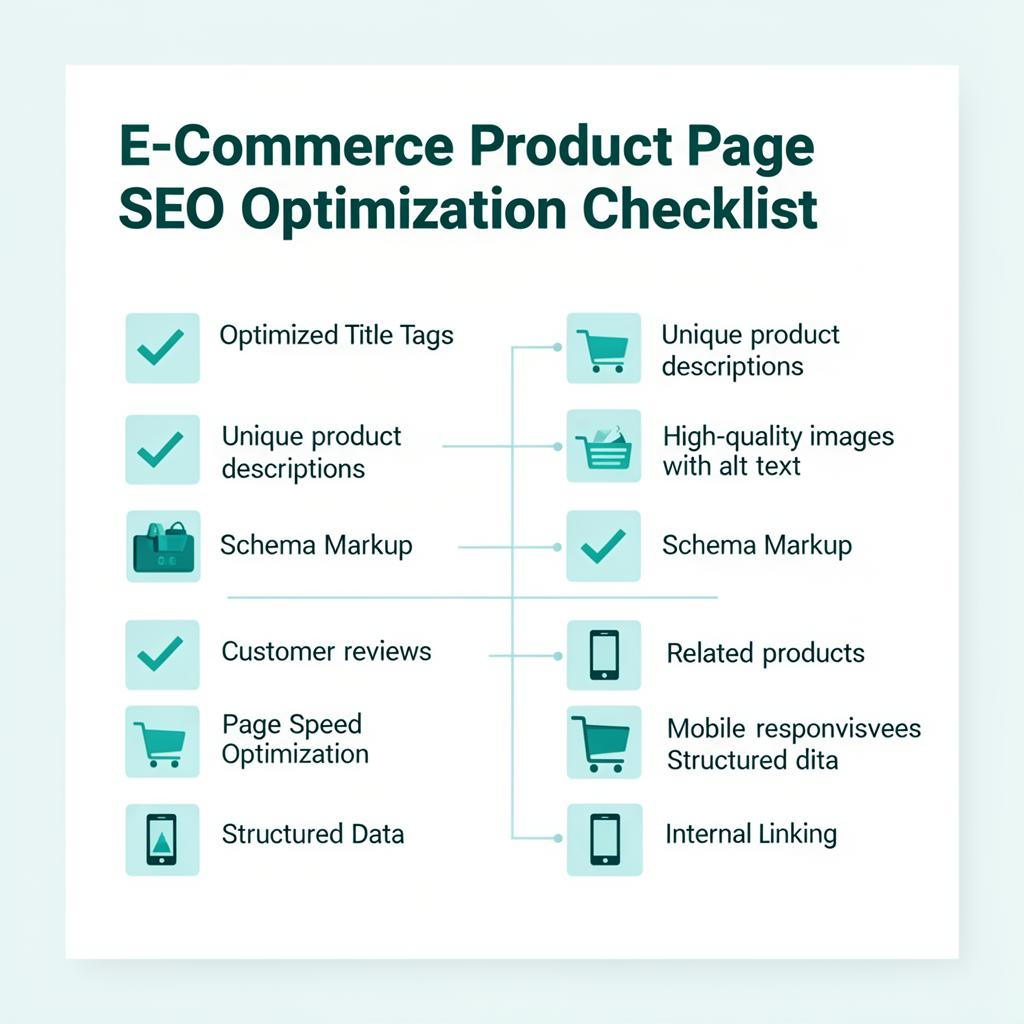
Title Tag Optimization for Products
Your product title tag is prime real estate for both rankings and click-through rates. The ideal formula balances keyword targeting with compelling copy that drives clicks.
Product Title Tag Formula:
    [Product Name] - [Key Feature/Benefit] | [Brand] | [Category]

    Example: "Wireless Noise-Canceling Headphones - 40Hr Battery | Sony WH-1000XM5 | Premium Audio"
Product Description Best Practices
Unique, compelling product descriptions differentiate your store from competitors using identical manufacturer copy. Focus on benefits over features, address customer pain points, and naturally incorporate keywords without stuffing.
| Element | Best Practice | SEO Impact |
|---|---|---|
| Description Length | 300-500 words minimum | High - Provides ranking signals |
| Unique Content | 100% original, no manufacturer copy | Critical - Avoids duplicate penalties |
| Feature Bullets | 5-7 benefit-focused points | Medium - Improves readability |
| Specifications | Structured data format | High - Enables rich snippets |
| Customer Reviews | Minimum 10+ reviews displayed | High - Fresh UGC content |
Image Optimization for E-commerce
Product images serve dual purposes: they convince visitors to buy AND drive traffic from Google Images (which accounts for 22% of all web searches). Proper optimization ensures your products appear in both traditional and visual search results.
✓ Image SEO Essentials
- • Descriptive file names (not IMG_001.jpg)
- • Alt text with product name + key feature
- • WebP format with JPEG fallback
- • Multiple angles (5-8 per product)
- • Zoom functionality for detail views
- • Compressed to under 200KB each
✗ Common Image Mistakes
- • Generic file names from camera
- • Missing or stuffed alt attributes
- • Oversized files slowing page load
- • Single product image only
- • No lifestyle or context images
- • Blocking images from crawling
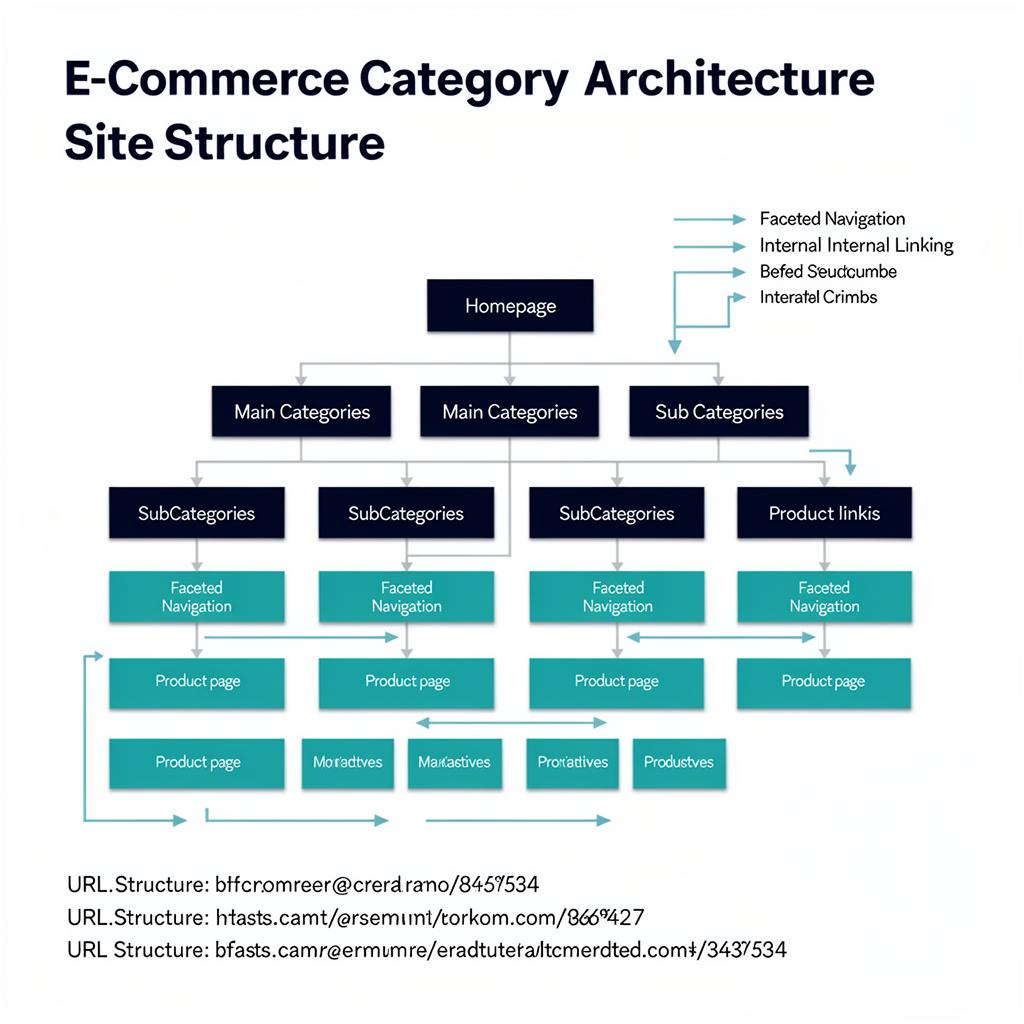
Category Page Architecture: The SEO Hierarchy
Your category structure determines how effectively search engines understand your product relationships and how easily customers navigate your store. A well-designed hierarchy improves crawlability, distributes link equity, and targets valuable category-level keywords.
The Three-Click Rule
Every product should be accessible within three clicks from the homepage. This isn't just about user experience—it ensures search engine crawlers can discover and index your entire catalog efficiently. Deep products get less crawl priority and accumulate less link equity.
Optimal Category Depth Structure
Faceted Navigation SEO
Faceted navigation (filters for size, color, price, etc.) creates massive crawl budget challenges. Without proper handling, a 10,000 product store can generate millions of indexable URL combinations, diluting your site's SEO authority.
⚠️ Faceted Navigation Solutions
- Canonical Tags: Point filtered pages to the main category page
- Robots Meta: Use noindex on low-value filter combinations
- JavaScript Rendering: Load filters via JavaScript to prevent indexing
- Parameter Handling: Configure URL parameters in Search Console
- Strategic Indexing: Allow indexing only for high-value filter combinations
Technical SEO for E-commerce: Speed, Structure & Schema
E-commerce sites face unique technical challenges: large product catalogs, dynamic content, and complex user interactions. Technical SEO excellence separates stores that dominate search results from those that struggle for visibility.
Core Web Vitals for Product Pages
Google's page experience signals directly impact rankings. E-commerce sites must optimize for speed while maintaining rich product experiences with images, videos, and interactive elements.
| Metric | Target | E-commerce Priority |
|---|---|---|
| Largest Contentful Paint (LCP) | < 2.5 seconds | Optimize hero product images |
| First Input Delay (FID) | < 100 milliseconds | Defer non-critical JavaScript |
| Cumulative Layout Shift (CLS) | < 0.1 | Reserve space for images/ads |
| Time to First Byte (TTFB) | < 600 milliseconds | Optimize database queries, use CDN |
Product Schema Markup
Structured data enables rich snippets that dramatically increase click-through rates. Product schema should include price, availability, reviews, and all relevant attributes.
{
  "@context": "https://schema.org/",
  "@type": "Product",
  "name": "Premium Wireless Headphones",
  "image": ["https://example.com/photos/headphones-1.jpg"],
  "description": "Premium noise-canceling wireless headphones with 40-hour battery life",
  "sku": "WH-1000XM5",
  "brand": {
    "@type": "Brand",
    "name": "Sony"
  },
  "offers": {
    "@type": "Offer",
    "url": "https://example.com/headphones",
    "priceCurrency": "USD",
    "price": "349.99",
    "availability": "https://schema.org/InStock",
    "seller": {
      "@type": "Organization",
      "name": "Your Store Name"
    }
  },
  "aggregateRating": {
    "@type": "AggregateRating",
    "ratingValue": "4.8",
    "reviewCount": "2847"
  }
}
Shopping Cart Recovery & Conversion Optimization
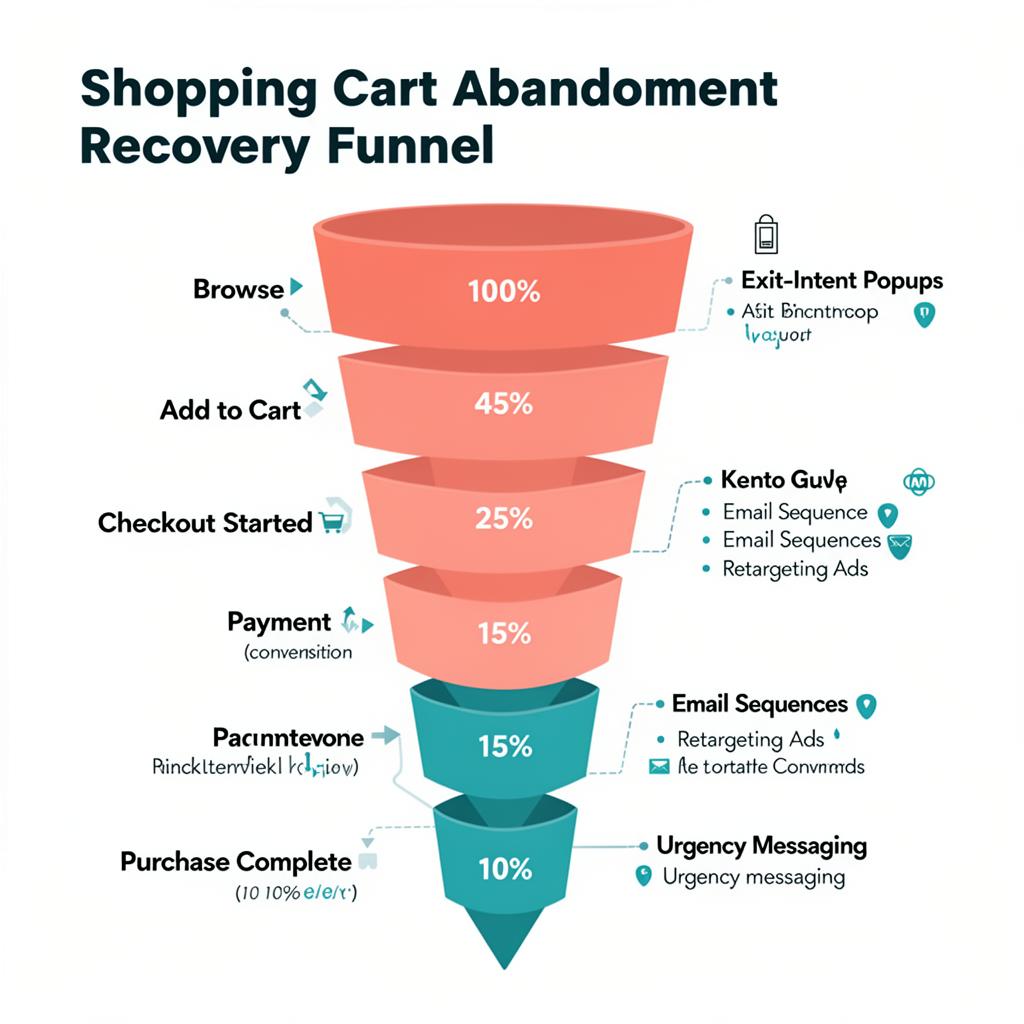
Cart abandonment averages 69.99% across e-commerce—meaning nearly 7 out of 10 potential customers leave without purchasing. While SEO drives traffic, conversion optimization captures revenue that would otherwise slip away.
Exit-Intent Recovery Strategies
Capture abandoning visitors before they leave with strategically timed interventions that don't harm user experience.
Exit-Intent Popups
Trigger offers when cursor moves to close tab. 10-15% recovery rate with compelling discount.
Email Sequences
3-email series: reminder (1hr), incentive (24hr), urgency (72hr). 15-20% recovery rate.
Retargeting Ads
Dynamic product ads showing exact abandoned items. 26% higher conversion than standard display.
Checkout Page SEO Considerations
While checkout pages aren't primary SEO targets, they impact overall site performance and user signals that affect rankings.
Checkout Optimization Checklist
Content Marketing for E-commerce SEO
Product and category pages have keyword limitations. Content marketing expands your organic footprint to capture informational queries that eventually convert to sales.
Buyer's Guide Strategy
Comprehensive buying guides target high-intent informational queries while naturally linking to product pages. They establish authority and capture customers earlier in the buying journey.
High-Converting Content Types
- Buying Guides: "How to Choose the Best [Product Category] in 2025"
- Comparison Posts: "[Product A] vs [Product B]: Which Is Right for You?"
- How-To Tutorials: "How to [Use/Install/Maintain] Your [Product]"
- Best-Of Roundups: "10 Best [Products] for [Use Case]"
- Problem-Solution: "How to Fix [Common Problem] with [Product Category]"
Measuring E-commerce SEO Success
Track the metrics that directly correlate with revenue, not vanity metrics that look impressive but don't impact the bottom line.
| Metric | What It Tells You | Target Benchmark |
|---|---|---|
| Organic Revenue | Direct business impact of SEO | 20-30% of total revenue |
| Organic Conversion Rate | Traffic quality from search | 2-4% (varies by industry) |
| Non-Brand Traffic | New customer acquisition | 50%+ of organic traffic |
| Product Page Rankings | Visibility for purchase intent | Top 3 for target keywords |
| Indexed Pages | Catalog coverage in search | 90%+ of important pages |
Implementing Your E-commerce SEO Strategy
Success in e-commerce SEO requires systematic execution across product pages, categories, technical infrastructure, and content. Start with the highest-impact optimizations and build momentum with consistent improvements.
90-Day E-commerce SEO Roadmap
Month 1: Foundation
Technical audit, site structure optimization, schema implementation, and fixing critical errors.
Month 2: Product Optimization
Unique descriptions for top 20% products, image optimization, internal linking improvements.
Month 3: Content & Scale
Launch buying guides, implement bulk optimization processes, begin link building outreach.
Partner with E-commerce SEO Specialists
E-commerce SEO requires specialized expertise that goes beyond general SEO knowledge. From handling product variants to managing seasonal inventory fluctuations, the complexities demand dedicated focus and proven methodologies.
At ZORO Marketing, we've helped e-commerce brands achieve 3-5x organic revenue growth through data-driven SEO strategies tailored to online retail. Our team understands the unique challenges of product page optimization, category architecture, and competing with marketplace giants.
Ready to Dominate E-commerce Search?
Get a free e-commerce SEO audit and discover opportunities to outrank competitors and drive more organic sales.
Request Your Free Audit