The Complete Guide to Generative Engine Optimization in 2025

AI Marketing15 min read
ZORO Marketing Team
December 20, 2025
Share:
The Complete Guide to Generative Engine Optimization in 2025
💡

Key Takeaway

Discover how generative engine optimization (GEO) is reshaping digital marketing. Learn proven strategies to get your brand cited in AI-generated responses from ChatGPT, Google AI Overviews, Perplexity, and more.

## What Is Generative Engine Optimization? Generative Engine Optimization (GEO) is the practice of optimizing your content to appear in AI-generated responses. While traditional SEO focuses on ranking in search engine results pages (SERPs), GEO focuses on getting your brand **cited as a trusted source** when AI assistants answer user queries. As AI platforms like ChatGPT, Google AI Overviews, Perplexity, and Claude become primary information sources for millions of users, businesses that ignore GEO risk becoming invisible to a growing segment of their audience. > **Looking for professional GEO services?** [Explore ZORO's Generative Engine Optimization Services](/geo-services) to get your brand cited in AI search results. ## Why GEO Matters in 2025 The shift toward AI-driven search is accelerating rapidly: - **ChatGPT** now has over 200 million weekly active users - **Google AI Overviews** appear in 40%+ of search queries - **Perplexity** processes millions of searches daily - **Voice assistants** handle billions of queries monthly When users ask these platforms for recommendations, they often receive direct answers rather than links. If your brand is not being cited in these responses, you are missing high-intent traffic that never reaches traditional search results. ### The Zero-Click Reality Unlike traditional search where users click through to websites, AI-generated responses often provide complete answers. This means: 1. Users get what they need without visiting your site 2. The brands AI cites gain credibility and awareness 3. Non-cited brands become invisible to AI-first searchers ## How Generative Engine Optimization Differs from Traditional SEO | Aspect | Traditional SEO | Generative Engine Optimization | |--------|----------------|-------------------------------| | **Goal** | Rank in top 10 results | Be cited as the answer | | **Metrics** | Rankings, traffic, CTR | AI mentions, citations, referral quality | | **Focus** | Keywords, backlinks | Authority, structure, E-E-A-T | | **User Journey** | Click through to site | Brand mentioned directly to user | | **Content Format** | Optimized for crawlers | Optimized for AI comprehension | ### Key Differences Explained **Authority Over Keywords**: While keywords still matter, GEO prioritizes making your content authoritative enough that AI systems trust and cite it. This means focusing on expertise, experience, authoritativeness, and trustworthiness (E-E-A-T). **Structure Over Length**: AI systems prefer well-structured content with clear definitions, statistics, and verifiable facts. A concise, well-organized article often outperforms a lengthy, rambling piece. **Citations Over Links**: Instead of just building backlinks, GEO focuses on getting cited by other authoritative sources that AI systems already trust. ## Core GEO Strategies for 2025 ### 1. Optimize Content Structure for AI Comprehension AI systems parse content differently than traditional search crawlers. To improve your chances of being cited: - **Use clear definitions**: Start sections with direct, quotable definitions - **Include statistics**: AI loves citing specific numbers and data points - **Create comparison tables**: Structured data is easier for AI to extract - **Write in Q&A format**: Match how users query AI assistants - **Use semantic HTML**: Proper heading hierarchy and structured markup ### 2. Enhance E-E-A-T Signals Google and other AI systems heavily weight expertise signals when deciding which sources to cite: - **Author credentials**: Add detailed author bios with qualifications - **Expert quotes**: Include insights from recognized industry experts - **Original research**: Publish proprietary data and studies - **Professional affiliations**: Highlight certifications and memberships - **Publishing history**: Build a consistent track record of quality content ### 3. Implement Comprehensive Schema Markup Structured data helps AI systems understand and attribute your content: ```json { "@type": "Article", "author": { "@type": "Person", "name": "Expert Name", "jobTitle": "Chief Marketing Officer", "sameAs": ["linkedin-url", "twitter-url"] }, "publisher": { "@type": "Organization", "name": "Your Brand" } } ``` Key schema types for GEO: - Article/BlogPosting for content pieces - FAQPage for Q&A content - HowTo for instructional content - Organization for brand information - Person for author credentials ### 4. Build Authoritative Citations AI systems learn which sources are trustworthy based on how often they are cited by other authoritative sources: - **Get mentioned in industry publications**: Contribute to respected outlets - **Earn citations in academic content**: Partner with researchers - **Appear in Wikipedia and knowledge bases**: Meet notability standards - **Build thought leadership**: Speak at conferences, publish research ### 5. Create AI-Friendly Content Formats Certain content formats are more likely to be cited by AI: - **Definitive guides**: Comprehensive resources on specific topics - **Original research**: First-party data and unique insights - **Expert roundups**: Curated perspectives from industry leaders - **Comparison content**: Structured evaluations of options - **FAQ pages**: Direct answers to common questions ## Measuring GEO Success Traditional SEO metrics do not fully capture GEO performance. Track these instead: ### Primary GEO Metrics 1. **AI Citation Tracking**: Monitor when your brand is mentioned in AI responses 2. **Referral Quality**: Analyze traffic from AI platforms (often shows as direct) 3. **Brand Mention Volume**: Track mentions across AI-generated content 4. **Authority Score Growth**: Monitor E-E-A-T indicators over time ### Tools for GEO Measurement - Brand mention monitoring tools - AI response testing (manually query platforms) - Referral traffic analysis - Schema validation tools - Backlink quality analyzers ## Common GEO Mistakes to Avoid ### 1. Ignoring Content Attribution AI systems need to understand who created content and why they should trust it. Anonymous or poorly attributed content rarely gets cited. ### 2. Focusing Only on Keywords Keyword stuffing does not work for GEO. AI systems evaluate content quality, not keyword density. ### 3. Neglecting Technical SEO Poor site structure, slow loading times, and technical issues can prevent AI systems from properly indexing and citing your content. ### 4. Creating Thin Content AI prefers comprehensive, authoritative content over brief, surface-level pieces. Depth and quality matter more than publication frequency. ### 5. Missing Schema Markup Without proper structured data, AI systems may misattribute or overlook your content entirely. ## The Future of Generative Engine Optimization As AI continues to evolve, GEO strategies will need to adapt: ### Emerging Trends - **Multimodal optimization**: Preparing for AI that processes images, video, and audio - **Conversational optimization**: Optimizing for follow-up queries in AI conversations - **Real-time content**: Creating content that AI can cite for current events - **Personalized AI responses**: Understanding how AI personalizes recommendations ### Preparing for Change The best GEO strategy is building genuine authority and creating genuinely helpful content. AI systems are designed to surface the most useful, trustworthy information—focus on being that source. ## Getting Started with GEO If you are new to generative engine optimization, start with these steps: 1. **Audit your current AI visibility**: Search for your brand and key topics in ChatGPT, Perplexity, and Google AI Overviews 2. **Assess your E-E-A-T signals**: Evaluate author credentials, citations, and authority markers 3. **Implement basic schema**: Add structured data to your most important pages 4. **Restructure top content**: Update key pages with AI-friendly formatting 5. **Monitor and iterate**: Track AI mentions and refine your approach ## Conclusion Generative engine optimization is not a replacement for traditional SEO—it is an essential complement. As AI becomes a primary information source for more users, brands that invest in GEO now will capture traffic and build authority that competitors will struggle to match. The fundamentals remain the same: create genuinely helpful content, build real authority, and make it easy for systems (whether search engines or AI) to understand and trust your brand. GEO simply applies these principles to the new reality of AI-driven discovery. --- ## Ready to Improve Your AI Visibility? Implementing GEO strategies requires expertise in content optimization, structured data, and authority building. If you want to accelerate your AI visibility, consider working with a specialized [generative engine optimization agency](/geo-services). **ZORO Marketing offers comprehensive GEO services including:** - AI visibility audits - Content optimization for AI citation - Schema markup implementation - E-E-A-T enhancement programs - Ongoing AI citation monitoring [Get a Free GEO Audit](/contact) | [Explore GEO Services](/geo-services)

Related GEO Resources

Continue learning about AI visibility optimization with our in-depth guides:
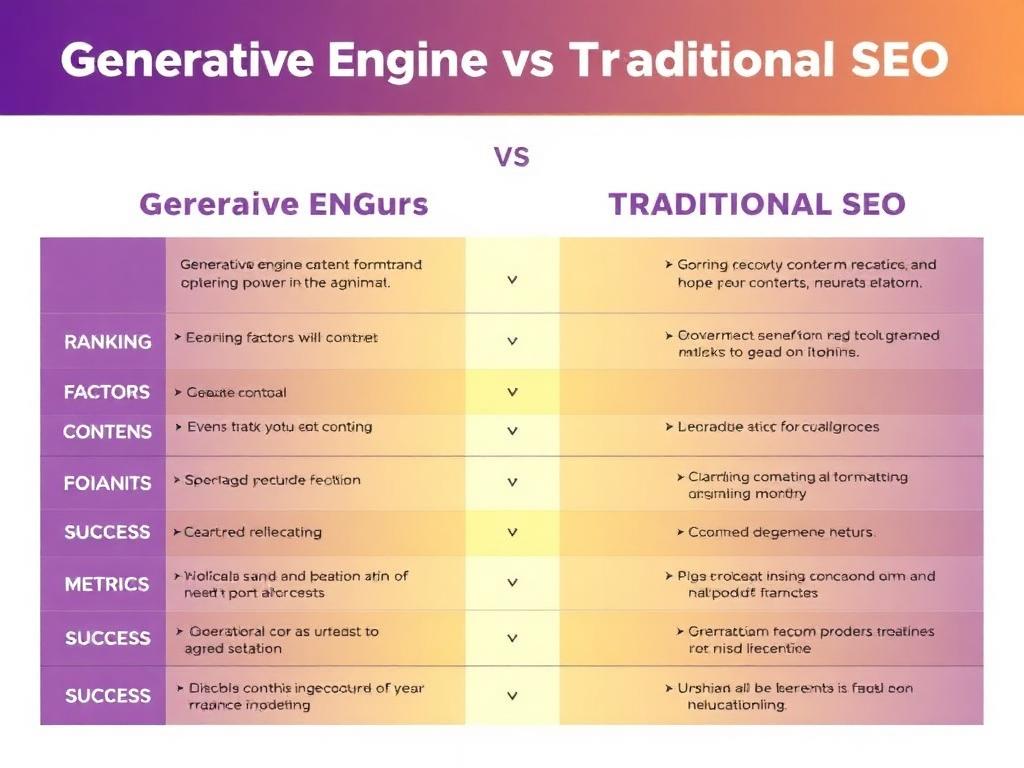
Generative Engine Optimization vs Traditional SEO
Infographic Key differences between GEO and traditional SEO approaches

Interactive Data Insights

Visualizations based on industry research and statistics

GEO vs Traditional SEO Adoption Rate

Percentage of marketers using each strategy in 2025

AI-Generated Search Traffic Growth

Percentage of search traffic from AI sources

GEO Ranking Factor Importance

Relative weight of different GEO optimization factors

Generative Engine Optimization vs Traditional SEO
InfographicKey differences between GEO and traditional SEO approaches

Frequently Asked Questions

Tags:

generative engine optimizationGEOAI SEOChatGPT optimizationAI visibilitydigital marketing 2025

Want More Marketing Insights?

Subscribe to our newsletter for the latest digital marketing tips and strategies.